Hay Fever and Allergy Relief
Antihistamine tablets, steroid nasal sprays and eye drops for hay fever and allergies, available over the counter in Gillingham.
Open 7 days a week, 7:30am to 10pm
Our pharmacists' advice
For most adults with hay fever, a once-daily non-drowsy antihistamine such as cetirizine is the place to start. If a blocked nose is the main problem, a steroid nasal spray such as Beconase, Pirinase or Clarinaze works better, but it takes up to two weeks to reach full effect, so start it early and keep going.
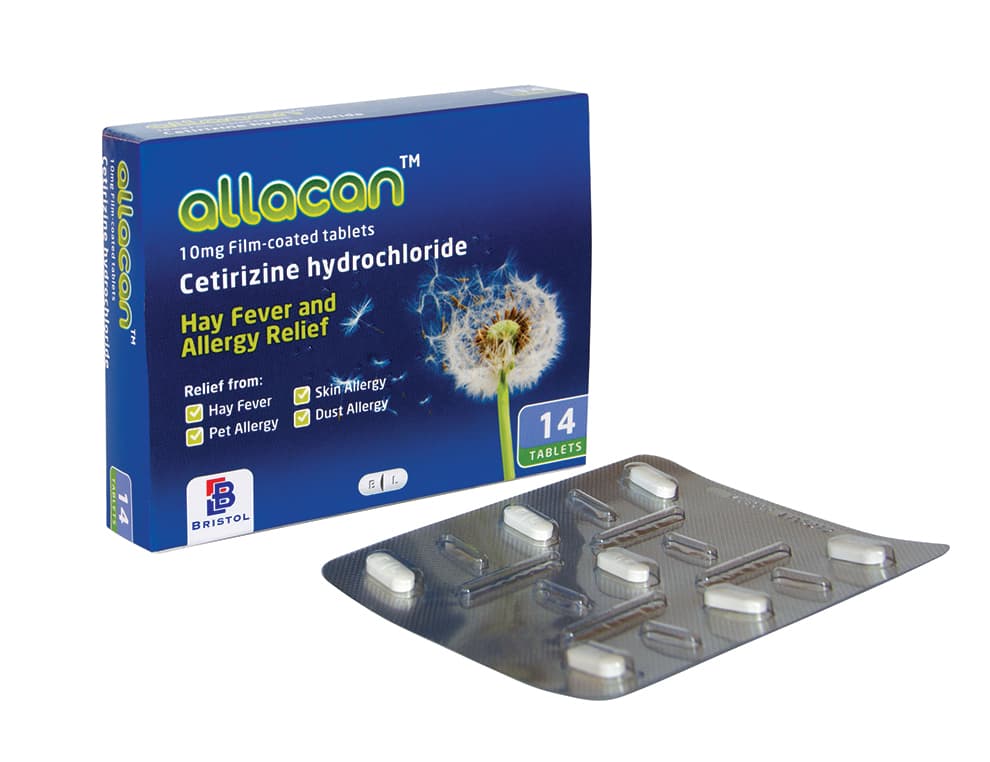
Antihistamine tablets
Antihistamines block the histamine your body releases when pollen, dust or pet hair lands on the lining of your nose and eyes. They are the quickest fix for sneezing, a runny nose and itchy eyes, and most people feel the difference within an hour of the first tablet. Cetirizine and loratadine are the two we hand over most often. Both are once a day, both are non-drowsy for most people, and both are general sale medicines so you can pick them up from the shelf. Fexofenadine 120 mg, which used to need a prescription, is now on general sale for hay fever in anyone aged 12 and over and suits people who found the other two wore off by the evening.
Chlorphenamine, sold as Piriton, is the older sedating type. It works well for a sudden flare, for hives and for itchy insect bites, but it will make most people drowsy and it should not be taken before driving. We would not suggest it as a sleep aid on its own: the NHS says not to take a drowsy antihistamine just for sleep problems without speaking to your doctor first, and not to take it for longer than two weeks (https://www.nhs.uk/medicines/chlorphenamine-including-piriton/).
Children aged 6 and over can take cetirizine tablets, and a liquid version is available for children from 2. If one antihistamine has stopped working for you, switching to a different one often helps, and it is safe to take a non-drowsy antihistamine alongside a steroid nasal spray. Our pharmacists can check anything you already take, especially if you are pregnant, breastfeeding or on other regular medicines.
Steroid nasal sprays
If your main complaint is a blocked nose, a steroid nasal spray is the better choice. Tablets do little for congestion, whereas a daily steroid spray calms the inflamed lining of the nose and, given time, controls sneezing and itchy eyes too. Beconase (beclometasone), Pirinase (fluticasone) and Clarinaze (mometasone) are all available without a prescription for adults aged 18 and over. Beconase is twice a day, the other two are once a day. Avamys, Nasonex and Flixonase Nasule drops still need a prescription, and if you have been prescribed one of those we can order it in for you. Dymista Control, which pairs a steroid with an antihistamine in one spray, is now a pharmacy medicine for adults.
The mistake we see most is giving up too soon. These sprays are preventers, not instant relievers, and it can take one to two weeks of daily use before you feel the full benefit (https://www.nhs.uk/medicines/beclometasone-nasal-spray/). Start a fortnight before your pollen season usually begins and keep using it every day, even on the days you feel fine. Technique matters too: tilt your head slightly forward, aim the nozzle towards the outer wall of the nostril rather than straight up the middle, and breathe in gently. Aiming at the septum is what causes the nosebleeds people worry about.
Saline sprays and rinses are worth adding for anyone whose nose feels dry or crusty. They contain no drugs, are safe at any age and rinse pollen out before it can cause trouble. Clarinaze is a pharmacy medicine, so one of our pharmacists will ask a couple of quick questions before handing it over; Beconase and Pirinase are general sale.
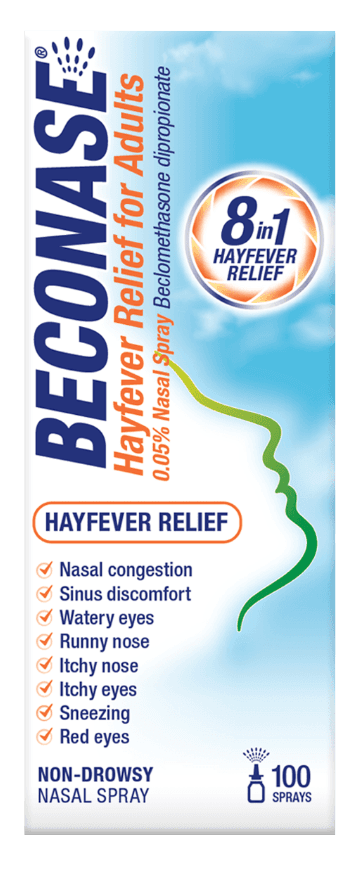 BeconaseBeconase Hayfever Relief for Adults is a steroid nasal spray that prevents and treats hay fever symptoms such as sneezing, a runny or blocked nose and itchy eyes.
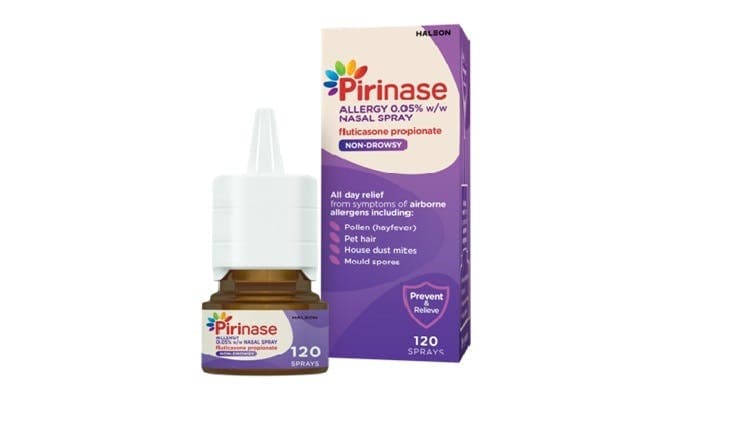 PirinasePirinase Hayfever Relief for Adults is a once-a-day steroid nasal spray for sneezing, a runny or blocked nose and itchy, watery eyes caused by hay fever.
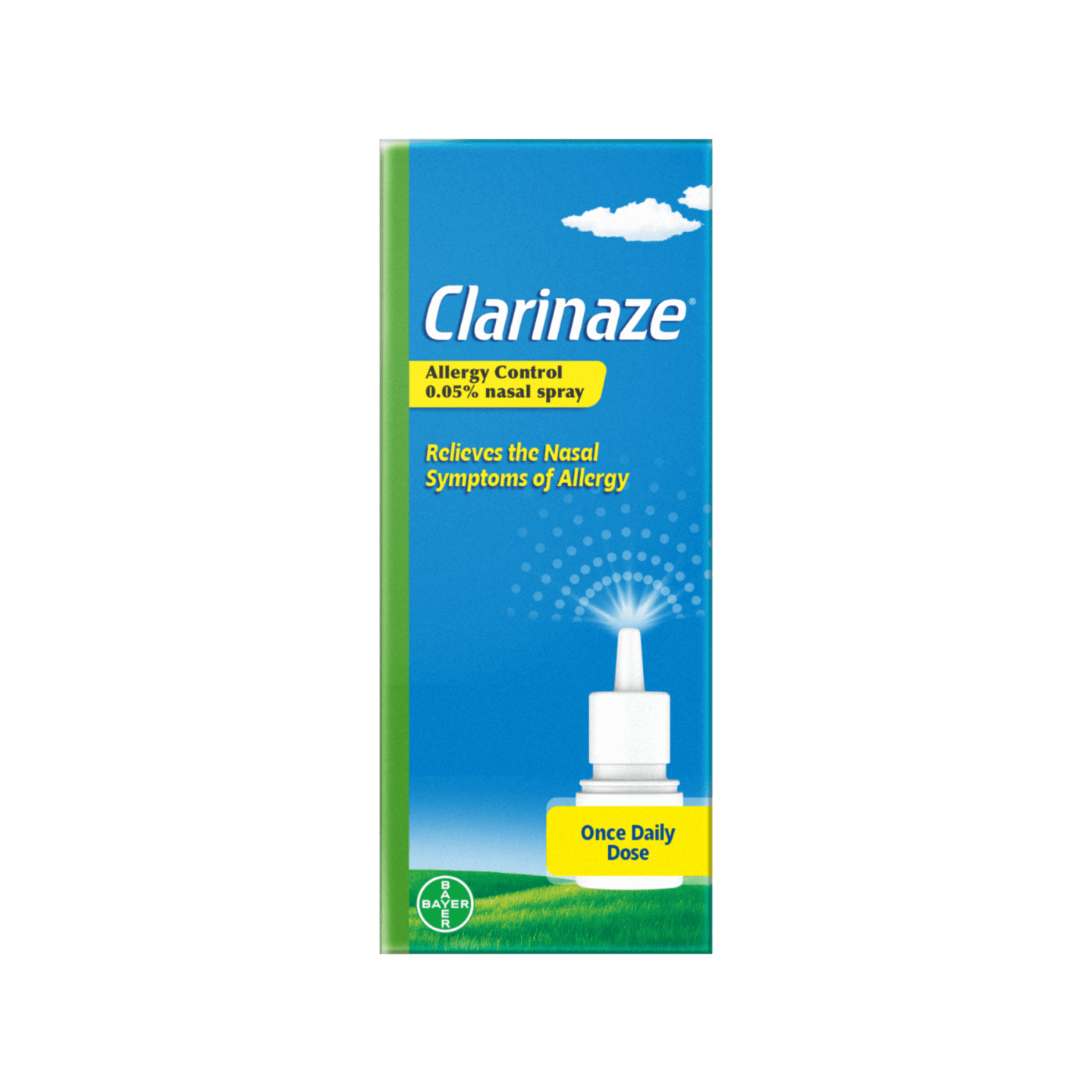 ClarinazeClarinaze Allergy Control is a once-a-day steroid nasal spray for hay fever and other nasal allergies, including a blocked, runny or itchy nose and sneezing.
Eye drops for itchy, watery eyes
If your eyes are the worst part of hay fever, antihistamine tablets often help but rarely clear it completely. Sodium cromoglicate eye drops, sold as Opticrom and under generic names, are used four times a day and stop the eye releasing histamine in the first place. They suit people who want to avoid tablets, and they can be used alongside a spray or an antihistamine. Antazoline with xylometazoline drops, sold as Otrivine Antistin, give faster relief but should only be used for a few days at a time.
Contact lens wearers should take lenses out before using drops and wait fifteen minutes before putting them back in, and preservative-free versions are available if you need them all season. If one eye is red, painful, sensitive to light or your vision has changed, that is not hay fever and it needs to be seen the same day.
Itchy skin, insect bites and hives
Antihistamines are not only for hay fever. A non-drowsy tablet such as cetirizine is the first thing we suggest for hives, widespread itching and reactions to insect bites, and for bad bites a sedating antihistamine at night can help you sleep through the itch. Anthisan cream, which contains the antihistamine mepyramine, is applied straight onto a bite or sting up to three times a day for adults and children over 2. Hydrocortisone 1% cream is the alternative for a single very itchy, swollen bite in anyone over 10, for up to seven days.
Hives that keep coming back for more than six weeks, hives with swelling of the lips or face, or a bite that is spreading, hot and increasingly painful two or three days later need more than a cream. An infected insect bite is one of the seven conditions we treat under NHS Pharmacy First, and we can supply antibiotics where they are needed without a GP appointment. Our infected insect bite page at /services/pharmacy-first/infected-insect-bite-medway explains what to look for.
When to get more help
Most hay fever is managed well with the products above, and our full guide at /blog/hayfever-treatment-medway covers how to combine them. See your GP if symptoms are still uncontrolled after a month of using an antihistamine and a steroid spray together, if you need treatment for most of the year, or if hay fever is making your asthma worse. Prescription options such as stronger sprays or a short course of steroid tablets exist for the worst weeks.
Call 999 if anyone develops swelling of the tongue or throat, difficulty breathing, or feels faint after a sting, a food or a new medicine. That is anaphylaxis and it does not wait for an antihistamine to work.
Frequently asked questions
For most adults, cetirizine or loratadine once a day. Both are non-drowsy for most people and available from the shelf. Fexofenadine is worth trying if those wear off before the evening. If you also have a blocked nose, add a steroid nasal spray rather than a second tablet.
Yes. Beconase, Pirinase and Clarinaze are all available over the counter for adults aged 18 and over, and Dymista Control is a pharmacy medicine for adults too. Avamys, Nasonex and Flixonase Nasule drops still need a prescription. Fluticasone is sold as a pharmacy medicine from age 12; below that a steroid spray needs a prescription.
Some people notice a difference within a few days, but the NHS says it can take up to two weeks of daily use to reach full effect. Start before your pollen season and use it every day, even on good days.
Yes. They work in different ways and are commonly used together. A tablet for sneezing and itching plus a spray for the blocked nose is the standard combination our pharmacists recommend.
Non-drowsy antihistamines such as cetirizine and loratadine are considered safe for daily use throughout the season, and many people take them for months. Check with a pharmacist if you are pregnant, breastfeeding, over 65 or taking other regular medicines.
Cetirizine and loratadine liquids are licensed from age 2 and tablets from age 6. Steroid nasal sprays on general sale are for adults aged 18 and over, though a pharmacy fluticasone spray is licensed from 12, so for a younger child with a badly blocked nose speak to us or the GP.
Also useful
- Hay fever treatment in Medway
Our pharmacists' full guide to antihistamines, sprays and eye drops.
- Infected insect bite treatment
What to do about a bite and when an infected bite needs Pharmacy First.
- NHS Pharmacy First
Free treatment for seven common conditions without a GP appointment.
Need it today? Walk in, no appointment needed.
465 Canterbury Street, Gillingham. Open 7 days a week, 7:30am to 10pm.