Pain Relief
Paracetamol, ibuprofen, co-codamol, pain relief gels and period pain tablets, available over the counter in Gillingham.
Open 7 days a week, 7:30am to 10pm
Our pharmacists' advice
Paracetamol is the safest first choice for most pain and fever. Ibuprofen is better where there is swelling or inflammation, such as a sprain, toothache or period pain, and the two can be taken together or alternated. Co-codamol 8/500 is the strongest painkiller we can sell without a prescription and is for short-term use only, three days at most.
Paracetamol
Paracetamol is the painkiller to reach for first. It suits almost everyone, including people who cannot take anti-inflammatories, pregnant women and children from 2 months in liquid form, and it brings down a temperature as well as easing pain. The adult dose is one or two 500 mg tablets up to four times a day, with at least four hours between doses and never more than eight tablets in 24 hours (https://www.nhs.uk/medicines/paracetamol-for-adults/).
The danger with paracetamol is not the tablets you know about but the ones hidden in other products. Cold and flu remedies, Lemsip, co-codamol, Solpadeine and many migraine products all contain a full dose. Taking any of those alongside plain paracetamol is how accidental overdoses happen, and an overdose can damage the liver without any warning symptoms for the first day. If you think you have taken too much, contact 111 or go to A&E straight away, even if you feel fine.
Ibuprofen and other anti-inflammatories
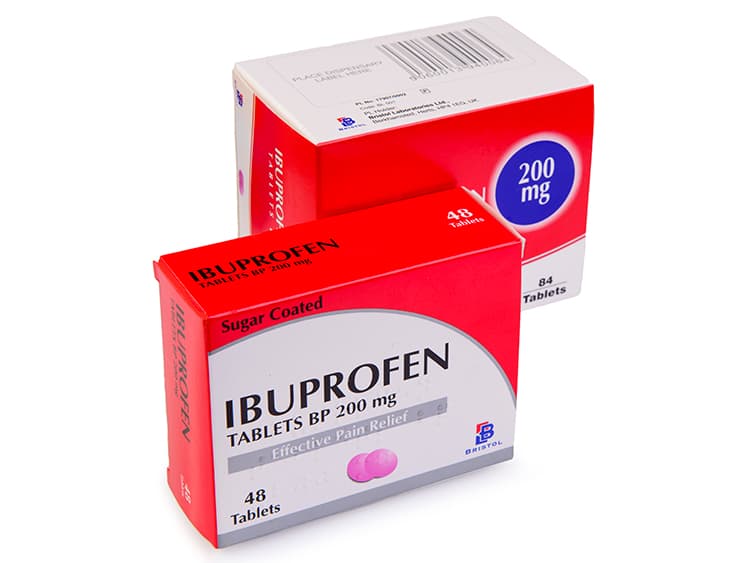
Ibuprofen belongs to the non-steroidal anti-inflammatory group, which means it reduces swelling as well as pain. That makes it the better choice for sprains, dental pain, back pain, period pain and the aching that comes with a cold. The usual adult dose is one or two 200 mg tablets three times a day, taken with food or milk to protect the stomach. It is suitable for adults and children aged 12 and over in tablet form, with a liquid for children from 3 months.
Ibuprofen is not for everyone. Avoid it if you have ever had a stomach ulcer or bleeding, if you have kidney problems, heart failure or uncontrolled high blood pressure, or if you take blood thinners, and do not take it in pregnancy unless a doctor or pharmacist has advised it, or at all from 20 weeks onwards. People with asthma should stop if it makes their breathing worse. Taken for more than a few days at a time it is worth asking us whether something to protect the stomach is sensible.
Paracetamol and ibuprofen work in different ways and can be taken together for pain that one alone does not control. Many people find alternating them every few hours keeps on top of dental or post-operative pain. Naproxen 250 mg is a longer-acting anti-inflammatory that we can sell as a pharmacy medicine for period pain in women aged 15 to 50, for no more than three days in any one period; higher strengths need a prescription.
Co-codamol and stronger painkillers
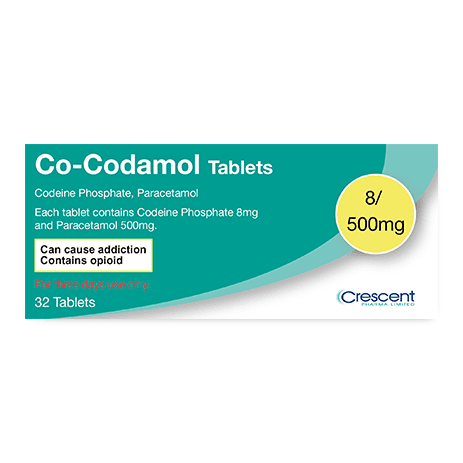
When people ask for the strongest painkiller we can sell, the answer is co-codamol 8/500, which combines 8 mg of codeine with 500 mg of paracetamol. Codeine is an opioid, so the packs carry an addiction warning required by the MHRA and the licence limits use to three days. It is a pharmacy medicine, so we will ask what the pain is and what you have already tried before handing it over. Higher strengths of co-codamol, 15/500 and 30/500, are prescription only, as are naproxen 500 mg and mefenamic acid.
Co-codamol is for short-term pain that paracetamol or ibuprofen alone has not touched, such as a dental abscess while you wait for the dentist or a bad back for a couple of days. It is not for headaches, which codeine can make worse if taken regularly, and it should not be given to children under 12 or to anyone who is breastfeeding. Because it already contains paracetamol, do not take plain paracetamol alongside it. Constipation and drowsiness are the usual side effects, and you should not drive if it makes you drowsy.
If you find you need co-codamol for more than three days, or you are buying it regularly, that is a pain problem that needs a proper diagnosis rather than more codeine. Speak to us or your GP; there are better long-term options for most kinds of pain.
Pain relief gels and patches
For a sore knee, a sprained ankle, tennis elbow or a stiff back, a gel rubbed into the skin puts the anti-inflammatory where it is needed with far less reaching the rest of the body. Ibuprofen gel 5% and 10% and diclofenac gel, sold as Voltarol, are the two mainstays and there is little to choose between them; diclofenac has slightly more evidence for osteoarthritis of the knee and hand. Both are applied three or four times a day, and both are an option for many people who cannot take anti-inflammatory tablets, though you should still check with us if you have a stomach ulcer, kidney problems or take blood thinners.
Heat patches and rubs such as Deep Heat and Tiger Balm ease muscle tension without any drug, and ice in the first two days after an injury reduces swelling. Freeze sprays and gels do the same job on the move. Do not use a gel on broken skin, and wash your hands afterwards so it does not end up in your eyes.
Period pain
Period pain is driven by prostaglandins, which is why anti-inflammatories work better than paracetamol for it. Ibuprofen 400 mg three times a day from the day before your period is due, taken with food, is the first thing to try. Naproxen 250 mg, sold as Feminax Ultra and under generic names, lasts longer and is available from the pharmacy counter for women aged 15 to 50, for no more than three days in any one period. A hot water bottle, gentle exercise and a TENS machine all have evidence behind them and can be combined with tablets.
Pain that stops you going to work or school every month, that has got worse over the years, or that comes with very heavy bleeding or pain during sex may be endometriosis or fibroids rather than ordinary period pain, and it deserves a GP appointment. Our guide at /blog/period-pain-otc-treatment goes through the options in more detail.
When to get more help
Over-the-counter painkillers are for short-term pain with an obvious cause. See a GP if pain lasts more than a few days without improving, keeps coming back, wakes you at night, or if you find you are taking painkillers most days. Regular use of any painkiller for headaches can itself cause medication overuse headache, so more than ten days a month of painkillers for headache is a reason to talk to us.
Call 999 for chest pain that spreads to the arm, jaw or back, a sudden severe headache unlike any before, or severe abdominal pain with vomiting. Call 111 or go to A&E if you have taken more paracetamol than the pack allows, even if you feel well.
Frequently asked questions
Co-codamol 8/500, which is paracetamol with a small dose of codeine, is the strongest pharmacy medicine we can sell. It is limited to three days and carries an addiction warning. For inflammatory pain such as a sprain or period pain, ibuprofen 400 mg three times a day is often just as effective.
Yes, for adults. They work in different ways and are safe to take together or alternated every few hours. Do not give both to a child without advice, and check that no other product you are taking, such as co-codamol or a cold remedy, already contains paracetamol.
For an adult, two 500 mg tablets up to four times in 24 hours, with at least four hours between doses. That is a maximum of 4 g a day from all sources, including cold and flu remedies and co-codamol. Taking more can damage the liver.
For a single sore joint or muscle, gel puts the medicine where it is needed with much less reaching the stomach and kidneys, so it is the safer choice for people who cannot take anti-inflammatory tablets. For widespread pain or period pain, tablets work better.
Yes, the 8/500 strength is a pharmacy medicine, so a pharmacist will ask a few questions before supplying it. The 15/500 and 30/500 strengths are prescription only. Co-codamol is for adults and children over 12 and for no more than three days at a time.
Ibuprofen 400 mg three times a day with food, started the day before your period, is the first choice. Naproxen 250 mg is available from the pharmacy counter for women aged 15 to 50 if ibuprofen is not enough, for up to three days in any one period. Heat and gentle exercise help too, and pain that disrupts your life every month should be discussed with a GP.
Also useful
- Period pain: over-the-counter options
What our pharmacists recommend for period pain.
- Free blood pressure check
Worth knowing before taking anti-inflammatories or decongestants regularly.
- NHS Pharmacy First
Free treatment for seven common conditions without a GP appointment.
Need it today? Walk in, no appointment needed.
465 Canterbury Street, Gillingham. Open 7 days a week, 7:30am to 10pm.